
The global health and wellness landscape is currently undergoing a seismic shift, transitioning from a "one-size-fits-all" approach to a future defined by precision, data, and extreme personalization. This evolution was punctuated this week by a landmark deal in the nutritional sector: Herbalife, a long-standing titan of the supplement industry, has officially entered into an agreement to acquire Bioniq, a London-based personalized supplement firm backed by global soccer icon Cristiano Ronaldo. The acquisition, valued at up to $150 million, marks a definitive turning point for Herbalife as it seeks to modernize its offerings and capitalize on the booming "bio-hacking" and bespoke wellness markets.
The transaction arrives at a moment of intense consolidation within the health-focused consumer goods space. Only days prior, the industry watched as French food giant Danone committed $1 billion to acquire Huel, the protein-rich meal replacement brand that has become a staple for time-poor, health-conscious professionals. The Herbalife-Bioniq deal, while smaller in absolute dollar value, is perhaps even more indicative of where the industry is heading. It signals a move away from generic mass-market powders and toward scientifically backed, individualized nutrient profiles tailored to a person’s unique biological markers.
Under the terms of the agreement, Herbalife will pay an initial $55 million upfront. The remaining $95 million is structured as contingent payments, or "earn-outs," which are tied to Bioniq’s ability to meet specific performance milestones and growth targets in the coming years. This structure suggests that Herbalife is not just buying a brand, but is investing in the future scalability of Bioniq’s proprietary technology and its ability to integrate with Herbalife’s massive global distribution network.
Bioniq was founded in 2019 by Vadim Fedotov, a former professional basketball player for the German national team, alongside James Hardy, a seasoned veteran of the e-commerce sector. Fedotov’s vision for the company was born out of his own experiences as an elite athlete, where he realized that even the most disciplined individuals often lack clarity regarding what their bodies actually need at a cellular level. "I created Bioniq to make health measurable, actionable, and accessible," Fedotov stated following the acquisition news. By leveraging a member-based model, Bioniq has successfully democratized the kind of high-level nutritional oversight previously reserved for professional athletes and the ultra-wealthy.
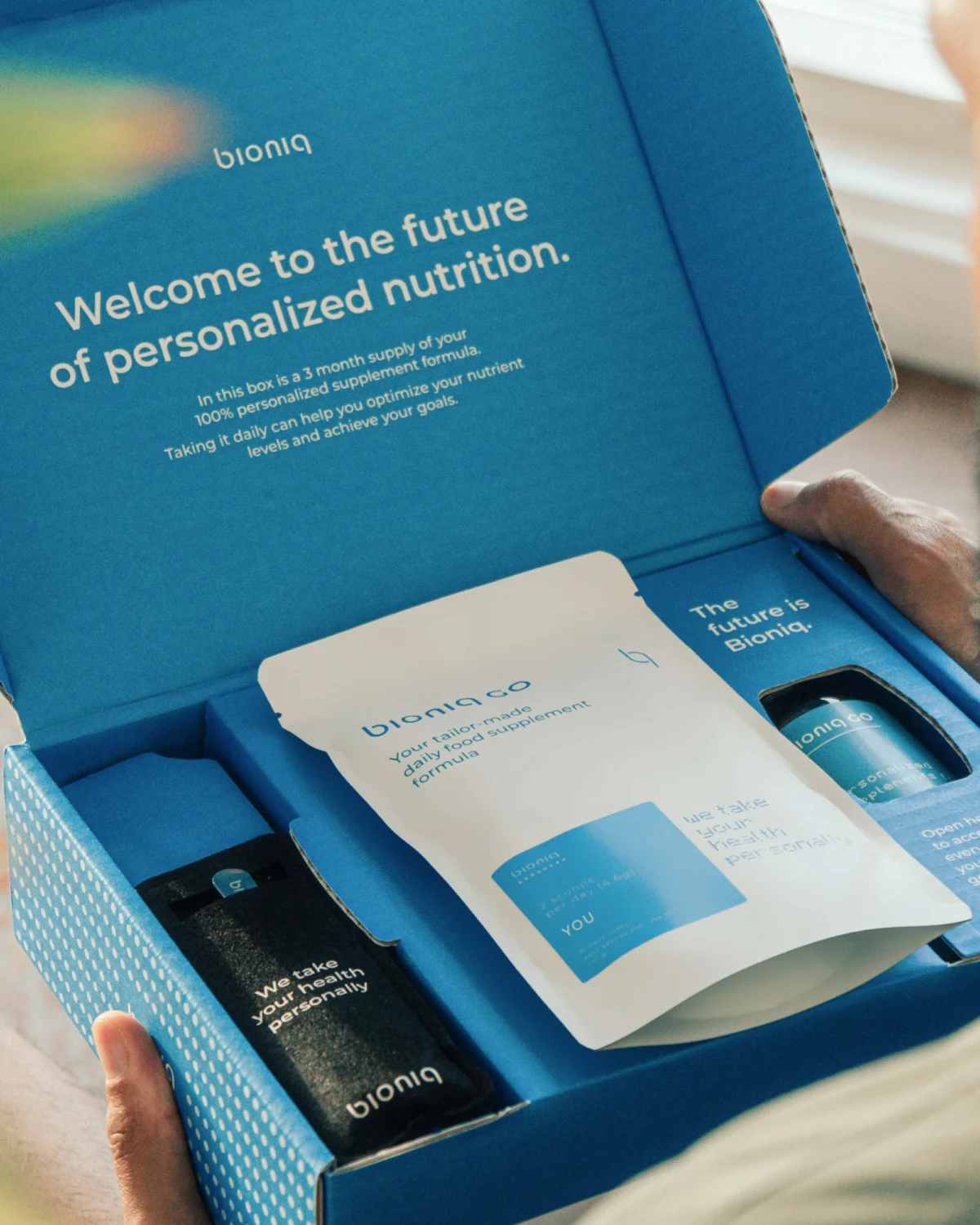
The core of the Bioniq experience is its data-driven personalization engine. New members begin their journey by completing an exhaustive lifestyle and health assessment. For those seeking even higher levels of precision, the company offers blood-test-based analysis. Using a proprietary AI-driven algorithm, Bioniq then synthesizes this data to create a unique daily formula for each user. Unlike standard multivitamins found on pharmacy shelves, a Bioniq formula might contain a highly specific ratio of antioxidants, vitamins, minerals, phytonutrients, amino acids, and prebiotic fibers. These supplements are manufactured in Switzerland, utilizing a patented micro-granule delivery system that ensures optimal absorption and allows for hundreds of thousands of possible combinations.
The acquisition is particularly noteworthy due to the involvement of Cristiano Ronaldo. The Portuguese superstar, widely considered one of the greatest athletes in history, became a member of Bioniq in 2022. Impressed by the results and the company’s commitment to data-backed performance, Ronaldo transitioned from a customer to a strategic investor in 2024, contributing an undisclosed sum to their growth rounds. Ronaldo’s involvement provides a unique bridge between the two companies; he has been a high-profile global ambassador for Herbalife since 2013. The acquisition of Bioniq essentially "closes the circle," bringing Ronaldo’s personal investment into the fold of his long-term corporate partner.
Ronaldo is not the only high-profile name in Bioniq’s corner. The company’s cap table has featured an impressive array of institutional and private investors, including Manchester United defender Diogo Dalot, Porsche Ventures, Rocket Internet, and HV Capital. This diverse backing underscores the widespread belief that Bioniq’s technological approach to nutrition is the "gold standard" for the next generation of consumers who demand transparency and efficacy.
For Herbalife, this acquisition is a centerpiece of its broader "Herbalife 2.0" transformation strategy. Founded in 1980 by Mark Hughes, Herbalife built a multi-billion dollar empire on the back of its direct-selling model and a product line focused on meal replacement shakes and weight management. However, in recent years, the company has faced the challenge of staying relevant to a younger, more tech-savvy demographic that views health through the lens of longevity and optimization rather than just weight loss.
Stephan Gratziani, the Chief Executive Officer of Herbalife, has been vocal about the need for the company to embrace digital disruption. "The future of health and wellness is increasingly personalized and data-driven," Gratziani remarked. "By combining Bioniq’s technology with our global infrastructure and Pro2col platform, we are uniquely positioned to deliver personalized nutrition to millions of consumers worldwide." The "Pro2col" platform Gratziani referenced is part of Herbalife’s internal tech stack designed to streamline the customization of product offerings for its millions of independent distributors and their customers.
The financial health of Herbalife has shown significant resilience and growth over the past twelve months. Currently listed on the New York Stock Exchange, the company boasts a market valuation of approximately $1.5 billion. This represents a staggering increase from its valuation of $876.8 million just one year ago. The market’s positive reaction to Herbalife’s recent strategic moves suggests that investors are optimistic about the company’s ability to pivot toward a premium, technology-integrated business model.
The integration of Bioniq into the Herbalife ecosystem is expected to be completed in the second quarter of the year. This is not merely a financial absorption; it is a talent acquisition as well. Vadim Fedotov is slated to join Herbalife’s senior leadership team, bringing his entrepreneurial energy and deep understanding of the personalized health space to the legacy organization. Other key members of the Bioniq team will also transition to Herbalife, ensuring that the specialized knowledge required to maintain Bioniq’s high-precision manufacturing and algorithmic integrity is preserved.
The broader implications for the global supplement industry are profound. We are witnessing the end of the "multivitamin era." As consumers become more educated about their own biology—thanks to the rise of wearable devices like the Oura Ring and Whoop, as well as affordable at-home blood testing—they are no longer satisfied with generic supplements that may provide nutrients their bodies don’t actually lack. The acquisition of Bioniq by a giant like Herbalife validates the personalized nutrition category, likely triggering a "space race" among other major players like Nestlé Health Science, GNC, and Bayer to acquire or develop similar technological capabilities.
Furthermore, this deal highlights the shifting role of the celebrity athlete in the business world. Cristiano Ronaldo’s transition from a brand "face" to a strategic "owner" whose portfolio companies are acquired by his sponsors represents a new level of influence. It suggests that elite athletes are increasingly looking to leverage their personal health regimens as intellectual property that can be scaled and sold.
As the second quarter approaches, the industry will be watching closely to see how Herbalife rolls out the Bioniq technology across its 90-plus markets. If successful, the deal could allow Herbalife to offer a "concierge-level" nutritional service to its vast customer base, potentially increasing customer retention and attracting a more affluent, health-conscious clientele. By merging the 44-year legacy of Herbalife with the cutting-edge Swiss precision of Bioniq, the combined entity aims to define the standard for what it means to be "healthy" in the 21st century—a standard that is no longer guessed at, but calculated with mathematical certainty.