
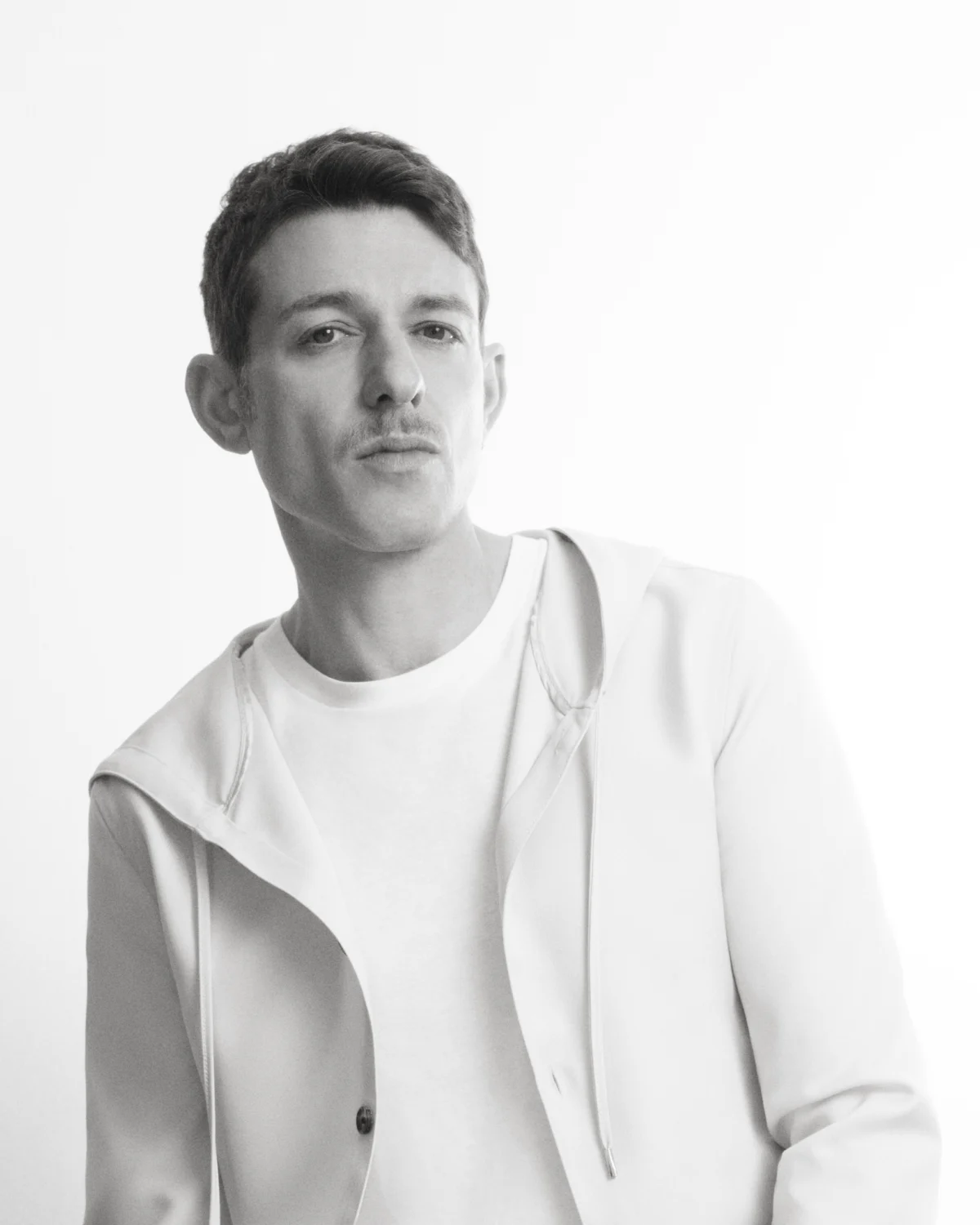
The landscape of Parisian high fashion is undergoing a period of profound structural realignment, and today, one of its most successful recent partnerships has reached its conclusion. Courrèges, the iconic house that once defined the futurist "Space Age" aesthetic of the 1960s, has officially announced the departure of its creative director, Nicolas Di Felice. The Belgian designer, who has spent the last five years meticulously rebuilding the brand’s identity and commercial relevance, will step down to pursue personal projects, leaving behind a legacy that transformed a heritage label into a modern cultural powerhouse. This news, confirmed by the house on Tuesday, marks the end of a half-decade tenure that many industry insiders consider a masterclass in brand resuscitation.
Di Felice’s departure comes at a pivotal moment for both the designer and the house. He recently celebrated his fifth anniversary with the brand during the Fall 2026 runway presentation, a show that served as a definitive summary of his design philosophy. In that collection, Di Felice masterfully balanced the sharp, geometric rigor of founder André Courrèges with a contemporary, edgy sensibility. The runway featured a sophisticated dialogue between utilitarian daywear and conceptual evening attire, emphasizing the "scissor-cut" precision that became his signature. It was a victory lap that solidified his reputation as a designer capable of honoring history without being suffocated by it.
Owned by Artemis, the private investment arm of the Pinault family (the same family behind the luxury conglomerate Kering), Courrèges has enjoyed a significant resurgence under Di Felice’s watch. In an official statement, the house expressed deep gratitude for his contributions, noting that the brand had experienced a "true renaissance" during his leadership. The statement highlighted his ability to reinterpret iconic codes and establish a "distinctive voice" that resonated with a new generation of fashion enthusiasts. This "dialogue with a new generation" was not merely marketing jargon; it was a tangible shift in the brand’s demographic, moving away from nostalgia and toward the wardrobes of global style icons and club-culture youth.
The success of the Di Felice era was largely built on a synergy between creative vision and strategic business repositioning. Working closely with former CEO Adrien Da Maia, Di Felice moved the brand away from being a relic of the past and toward a sensual, gender-fluid future. He took the house’s most famous tropes—the vinyl jackets, the white go-go boots, and the ribbed knits—and infused them with a modern, erotic charge. Under his direction, Courrèges became synonymous with a specific kind of Parisian cool: minimalist yet provocative, structured yet wearable.
Beyond the garments, Di Felice was instrumental in expanding the brand’s ecosystem. He oversaw the relaunch of the Courrèges fragrance line, introducing evocative new scents like "Slogan" and "Le Messager," which helped diversify the brand’s revenue streams and sensory identity. In the realm of leather goods, he introduced the Hobo and Holy handbags, accessories that quickly gained "it-bag" status and provided the commercial anchor necessary for a luxury brand to thrive in a competitive market.
Perhaps most importantly, Di Felice understood that a modern fashion house must function as a cultural entity rather than just a clothing manufacturer. He collaborated with DJ and producer Erwan Sene to create immersive, pulsating soundtracks for his shows, and worked with scenographer Rémy Brière to design the minimalist, rectangular sets that became a staple of his runway presentations. Together, they launched "Club Courrèges," a series of high-energy club nights that bridged the gap between the runway and the dance floor, embedding the brand within the global nightlife community. This community-centric approach ensured that Courrèges was talked about not just in fashion magazines, but in the circles of music, art, and underground culture.
The timing of this departure coincides with a broader transition within the company’s leadership. In 2024, Marie Leblanc, the former CEO of Victoria Beckham, took the helm of Courrèges, succeeding Da Maia. Leblanc’s arrival signaled a new phase of growth focused on price repositioning and global retail expansion, particularly as the luxury sector faces a cooling period in consumer spending. While Di Felice expressed his deepest gratitude to François Pinault and François-Henri Pinault for their "trust," the transition to a new creative lead suggests that Artemis is ready to write the next chapter of the Courrèges story.
Di Felice’s journey to the top of Courrèges was paved by an impressive pedigree. A graduate of the prestigious La Cambre fashion school in Brussels, he belongs to a lineage of Belgian designers known for their technical prowess and intellectual depth. His career was largely shaped by his long-standing professional relationship with Nicolas Ghesquière. Di Felice joined Ghesquière at Balenciaga in 2008, spending six years honing his craft during one of the most influential periods in that house’s history. After a brief but formative stint at Dior under the creative direction of Raf Simons, he reunited with Ghesquière at Louis Vuitton in 2015. This background in high-concept, architecturally-driven fashion provided the perfect foundation for his work at Courrèges, where geometry and structure are paramount.
During his tenure, Di Felice also became a favorite among the celebrity elite, further cementing the brand’s cultural cachet. His designs were frequently seen on the likes of Dua Lipa, Rosalía, Bella Hadid, and Zoe Saldaña. One of his most high-profile moments came when he designed custom stage outfits for Beyoncé’s "Renaissance World Tour," a collaboration that perfectly aligned his love for club culture with the world’s biggest pop stage. He also engaged with the community through grassroots projects, such as a pop-up with the independent Paris record store Dizonord, proving that his interests extended far beyond the traditional luxury bubble.
The question of who will succeed Di Felice is the latest mystery in what industry observers are calling "creative director musical chairs." In recent months, several major fashion houses—including Chanel, Celine, and Givenchy—have seen leadership changes or are currently searching for new creative heads. The announcement of Di Felice’s successor is expected as early as next week, and the industry is buzzing with speculation. Will the house choose another technical specialist, or will they pivot toward a more commercially-focused or celebrity-driven appointment?
For Di Felice, the future remains an open book. While his statement mentioned focusing on "personal projects," a designer of his caliber—with a proven track record of reviving a dormant brand—will undoubtedly be at the top of the list for any house seeking a fresh perspective. Whether he decides to launch his own eponymous label or take the reins at another storied maison, his impact on Courrèges has ensured that his name will remain a central fixture in the fashion discourse.
As Courrèges prepares for its next era, the industry reflects on the "Di Felice years" as a period of clarity and cool. He took a brand that was often dismissed as a 1960s costume and made it feel essential for the 2020s. He reminded the world that André Courrèges’ original vision was about freedom, movement, and the future—and for five years, Nicolas Di Felice was the one pointing the way. The "Space Age" label is once again on the map, and while its architect is moving on, the foundation he built is stronger than it has been in decades. The next creative director will inherit a brand that is not just a name in a history book, but a living, breathing part of the contemporary fashion landscape.