

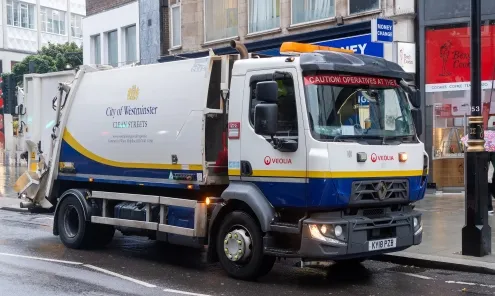
Veolia Environnement, the global leader in optimized resource management, concluded the fiscal year 2025 with a financial narrative characterized by strategic consolidation and significant operational leverage, even as overall revenue remained largely flat compared to the previous year. The company posted total sales of €44.396 billion, a marginal dip from the €44.692 billion recorded in 2024. However, the underlying strength of its integrated service model shone through in profitability metrics, with Earnings Before Interest, Taxes, Depreciation, and Amortization (EBITDA) climbing robustly to €7.050 billion, an improvement over the €6.788 billion achieved in 2024. This divergence between revenue stability and profit growth underscores a successful year focused on integration, portfolio refinement, and rigorous cost management following the landmark acquisition of Suez.
Estelle Brachlianoff, the Group’s Chief Executive Officer, framed 2025 as a watershed moment, declaring it a “truly pivotal year” for Veolia. This pivotal nature stemmed from the definitive closure of the complex, multi-year integration process of Suez, which has now been fully absorbed into Veolia’s operational framework. More critically, Brachlianoff highlighted the successful execution of a major strategic realignment designed to sharpen the group’s focus toward high-growth sectors and solidify its international footprint. This strategic pivot is intended to position Veolia optimally for the accelerating global demand for environmental solutions.
"2025 was not just a year of integration completion; it was a year of decisive redirection," Brachlianoff stated during the results presentation. "We successfully closed the Suez chapter and, simultaneously, engineered a significant strategic refocusing of our entire portfolio. This recalibration is explicitly aimed at accelerating growth trajectories where our expertise offers the highest value and strengthening our competitive positioning across key global markets."
The CEO further emphasized the resilience demonstrated throughout the year, particularly noting the impressive organic growth in profitability. Veolia achieved an organic EBITDA growth rate of 6.3%, significantly exceeding the internal target range set between 5% and 6%. This outperformance occurred despite navigating a persistently complex macroeconomic environment marked by fluctuating energy costs, inflationary pressures on supply chains, and geopolitical uncertainties affecting certain operational territories. Brachlianoff pointed to a particularly strong performance in the final quarter of 2025, suggesting that the strategic adjustments were beginning to yield accelerated returns as the year concluded.
Brachlianoff painted an optimistic picture regarding the external market demand for Veolia’s core environmental services—water management, waste recovery, and energy efficiency. She asserted that the global appetite for securing essential resources and managing ecological transitions has reached an unprecedented peak. "The necessity for environmental security has never been more acutely felt across the global industrial and municipal landscape," she observed. "From the dynamic, high-growth economies of the Asia Pacific region to the mature markets of the Americas and Europe, and the rapidly developing infrastructure needs in the Middle East, environmental resilience is now intrinsically linked to industrial competitiveness, community stability, and even national sovereignty. Veolia is uniquely positioned to serve these critical needs."
Emmanuelle Menning, the Deputy Chief Executive Officer overseeing Finance and Purchasing, provided deeper color on the financial achievements, confirming that the realized results surpassed internal expectations across several key performance indicators. Menning credited the robust operational leverage achieved through the synergy capture efforts stemming from the Suez merger as a primary driver of enhanced profitability.
"Indeed, our 2025 financial performance was exceptional on multiple fronts," Menning confirmed. "Foremost among these is the profound improvement in our operating efficiency. Thanks to the deep embedding of our ‘multi-local’ operating model—a structure that combines global scale with local responsiveness—we have successfully driven our EBITDA margin to nearly 16%. This represents a substantial gain of 150 basis points over the last two years alone."
Menning elaborated on the positive feedback loop created by this enhanced efficiency. The strong operational leverage translated directly into a faster rate of increase for current net income compared to revenue growth, demonstrating a clear dissociation between top-line volume and bottom-line profitability—a hallmark of a maturing, high-value service business.
Furthermore, the company demonstrated exceptional financial discipline, resulting in strong free cash flow generation. Menning highlighted an "outstanding value creation above expectations," indicating that capital deployed during the year delivered superior returns, largely due to the successful execution of synergy targets related to the Suez integration. "We have maintained constant, rigorous monitoring of our synergy realization, and I am pleased to report that we completed the integration savings targets ahead of schedule and above our initial projections," she added.
The strong financial footing and operational clarity achieved in 2025 provide a stable launchpad for the upcoming fiscal year. Menning concluded on a confident note regarding the immediate future: "We are initiating 2026 in excellent shape, perfectly calibrated for another year of solid, double-digit growth in our core results. The strategic foundation laid in 2025 ensures that Veolia remains positioned at the forefront of the environmental transition economy."
The mixed revenue outcome, therefore, masks a year of profound internal success. While the sheer volume of sales remained constant, the quality of those sales improved dramatically. The reduction in sales volume (€300 million less than 2024) can be partially attributed to strategic divestments of non-core or lower-margin assets undertaken as part of the portfolio refocusing, allowing the company to concentrate capital and management attention on areas promising superior, sustainable returns.
Analysts following the utility and environmental services sector have noted that Veolia’s success in rapidly integrating Suez while simultaneously enhancing margins speaks volumes about the robustness of its management team and the intrinsic value of its diversified, essential service portfolio. The emphasis on organic EBITDA growth, irrespective of broader economic volatility, signals a powerful underlying demand curve for sustainable infrastructure and resource management solutions, reinforcing Veolia’s status as an essential partner in global environmental stewardship. The €262 million increase in EBITDA, achieved on slightly lower revenue, demonstrates effective pricing power and operational cost discipline in the face of external pressures.