

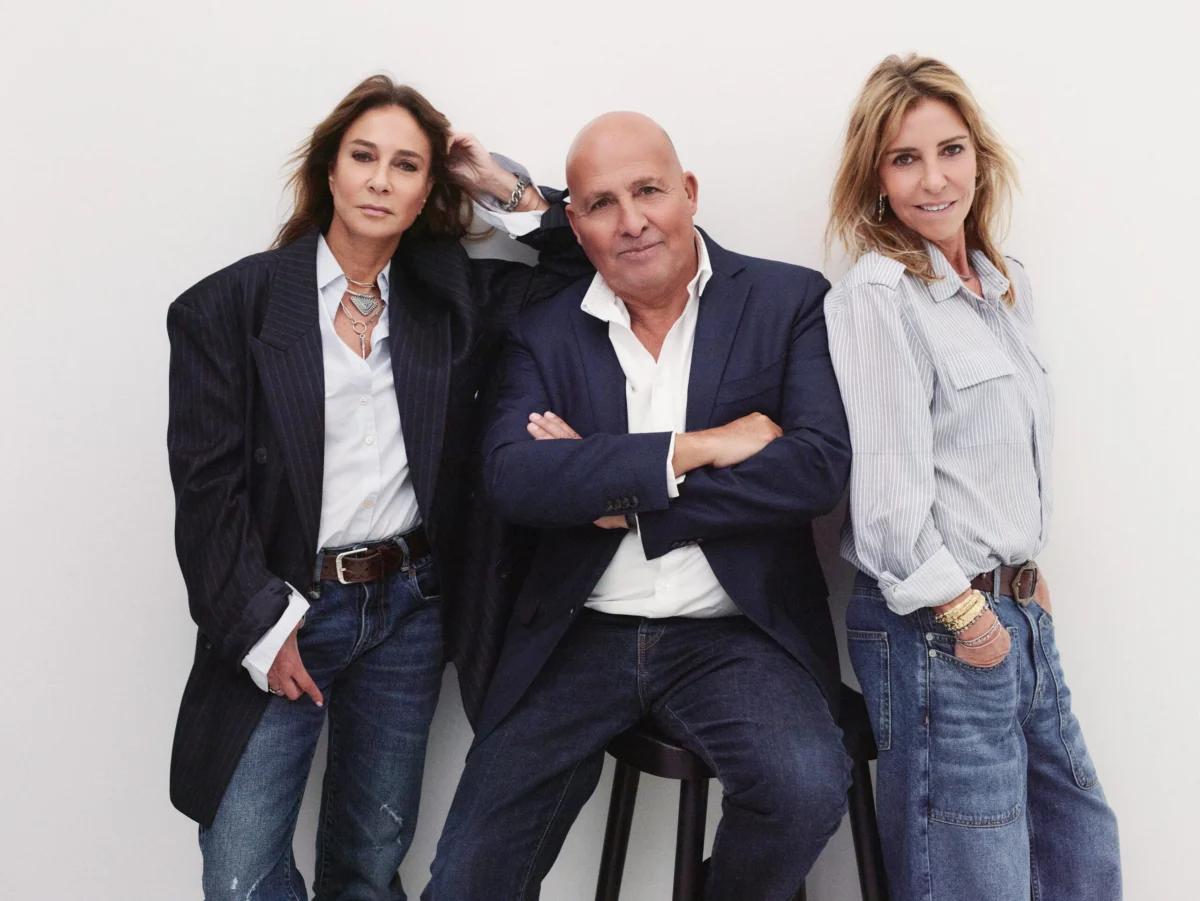
The French contemporary fashion house Ba&sh has officially entered a new era of fiscal resilience, reporting a robust 11 percent surge in fourth-quarter sales for 2025. This performance capped a transformative year for the Paris-based label, bringing its total annual revenue to the 300 million euro mark. The results serve as a powerful validation of the "New Beginnings" turnaround plan, a strategic roadmap initiated after the brand’s original founders—Sharon Krief, Barbara Boccara, and Dan Arrouas—reclaimed operational control of the company in late 2024. By shifting away from the high-volume, discount-heavy models that have plagued the mid-luxury segment, Ba&sh is betting on a "less but better" philosophy that prioritizes brand equity and operational discipline over aggressive, unchecked expansion.
The journey to this 300 million euro milestone was not without its initial hurdles. According to Chief Financial Officer Géraldine Dubois, the 2025 fiscal year began under significant pressure, with a first quarter that she described as "a bit more difficult" and ultimately negative in terms of growth. However, the internal restructuring and the re-alignment of the brand’s DNA began to bear fruit by the second quarter. From that point forward, the company maintained a consistent trajectory of double-digit growth, culminating in a holiday season that exceeded expectations. Full-year like-for-like sales rose by 9 percent, a metric that highlights the brand’s ability to drive increased value from its existing footprint rather than relying solely on new door openings.
The "New Beginnings" strategy was fortified in March 2025 by a comprehensive financial restructuring. This move secured the continued support of the investment firm HLD and included a vital 15 million euro capital injection from shareholders. This influx of liquidity allowed the management team to clean up the balance sheet and invest in the long-term health of the brand rather than focusing on short-term survival. CEO Dan Arrouas emphasized that the past year was defined by "alignment"—ensuring that every facet of the business, from the design room to the digital storefront, reflected the core identity that Krief and Boccara first established when they founded the brand in 2003.
One of the most striking components of the Ba&sh turnaround is the radical rationalization of its physical retail network. In an industry where "more is more" has long been the mantra for growth, Ba&sh took the counterintuitive step of closing approximately 50 stores over the past twelve months. Arrouas noted that many of these closures occurred in urban centers where the brand had become over-saturated, with multiple boutiques competing for the same foot traffic within a small radius. The decision to exit these locations was not merely a reaction to poor sales figures but a strategic choice to protect the brand’s prestige. "The decision factor is also, does this store serve the brand?" Arrouas explained.

Looking ahead, the retail strategy is shifting toward "expressive" flagships. The company is moving away from smaller, cramped units in favor of larger spaces ranging from 1,000 to 1,600 square feet. These locations are designed to act as immersive brand universes, capable of showcasing the full breadth of the Ba&sh lifestyle, which now includes rapidly expanding categories like accessories and wellness. For 2026, the brand has high-profile openings slated for Bordeaux and the prestigious Saint-Germain-des-Prés district in Paris. In the United Kingdom, where the brand maintains 11 standalone stores, the focus has shifted from expansion to evolution. The Marylebone location in London is set to be relocated and upgraded to a flagship format, signaling that even in "mature" markets, there is room to enhance the customer experience.
While the physical footprint is being streamlined, the digital channel is being fortified. E-commerce now accounts for nearly a quarter of Ba&sh’s total revenue. To sustain this momentum, the company is preparing for a massive technological overhaul, with a full redesign and replatforming of its digital architecture scheduled to begin later this year and rollout in 2027. This investment is not just about aesthetics; it is about creating a seamless, "phygital" experience that bridges the gap between the tactile boutique environment and the convenience of online shopping.
Perhaps the most significant shift in Ba&sh’s business model is its approach to marketing and customer acquisition. For years, like many of its peers in the contemporary space, the brand leaned heavily on paid performance advertising—digital tactics designed to drive immediate clicks and conversions through discounts and targeted ads. Arrouas has made the executive decision to "stop the race" for high-cost customer acquisition. Instead, the marketing budget is being redirected toward brand-building initiatives that foster long-term loyalty. By putting the "brand back at the center," Ba&sh is attempting to insulate itself from the volatility of digital ad costs and the eroding effects of constant promotions.
The success of this brand-centric approach is perhaps most visible in the accessories category, which saw a 20 percent growth in 2025. Accessories have become the brand’s primary engine for "recruiting" a younger demographic. While the core Ba&sh customer has traditionally been in the 40-to-50 age bracket, items like the "June" bag—a slouchy, versatile tote—have become cult favorites among Gen Z and millennial shoppers. The "June" bag alone has moved upwards of 25,000 units over the last two years, serving as an entry-level "gateway" product. Younger consumers, aged 18 to 30, are entering the brand through these high-margin accessories before eventually graduating into the more expensive ready-to-wear collections.
Beyond apparel and leather goods, Ba&sh is diversifying into the wellness sector, a move that aligns with its B Corp certification and its image as a holistic lifestyle brand. In 2025, the company hosted three successful customer retreats and launched a line of bodywear. Arrouas views wellness not as a side project, but as a "central topic for 2026." The goal is to evolve the relationship with the customer from a purely transactional one to a community-based experience, offering more than just products.

Operationally, the brand is leveraging cutting-edge technology to protect its margins. By utilizing Anaplan, a planning software powered by artificial intelligence, Ba&sh has significantly improved its demand forecasting. This allows the company to buy inventory more precisely, reducing the surplus that typically leads to end-of-season markdowns. "We now buy quantities we expect to sell before sales," Arrouas noted, underscoring a commitment to full-price selling that is rare in the contemporary market. This focus on efficiency means that while revenue growth for 2026 is projected to be modest—estimated between 300 million and 310 million euros—the quality of that growth will be significantly higher in terms of profitability.
The brand’s international strategy remains focused but cautious. In the United States, Ba&sh continues to operate flagships in key fashion hubs like New York, Los Angeles, and Miami, focusing on optimizing these existing locations rather than a rapid nationwide rollout. In China, where the brand has 50 points of sale, the strategy mirrors the global "less but better" approach, emphasizing like-for-like growth and network rationalization amidst a complex macroeconomic environment.
As Ba&sh looks toward the remainder of 2026, the company is preparing for a major push into AI integration across all business functions. A new executive hire dedicated to AI deployment is expected to be announced on April 15, signaling the brand’s intent to remain at the forefront of the industry’s technological evolution. Despite the headwinds of rising freight costs and geopolitical instability, the leadership team remains optimistic. By focusing on "absorbing" disruptions rather than merely suffering them, Ba&sh is positioning itself as a model for the modern, responsible, and tech-driven fashion enterprise. The message from Paris is clear: the era of chasing volume at any cost is over; the era of intentional, profitable, and brand-first growth has begun.