

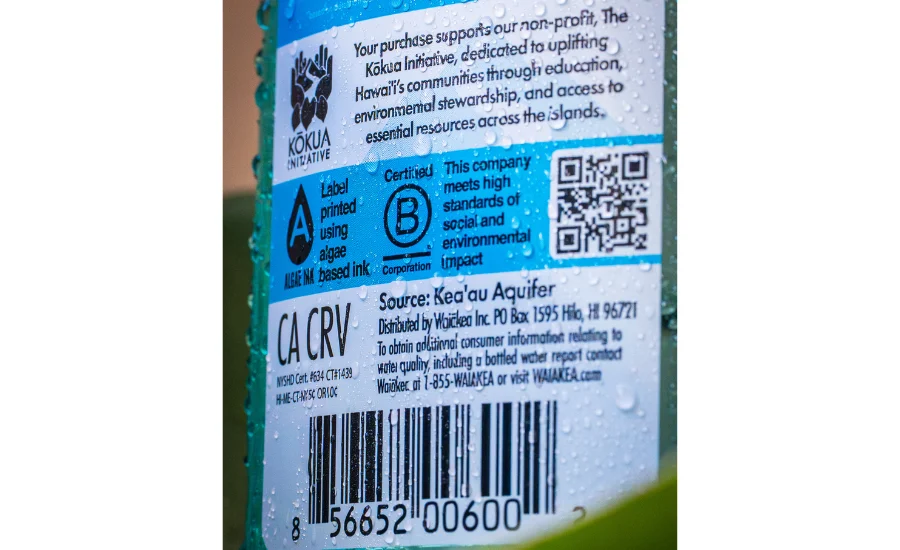
The global packaging industry is currently navigating a period of profound transformation, driven by a dual mandate to maintain high-performance aesthetic standards while drastically reducing the environmental toll of production. For decades, the "carbon black" pigment used in everything from shipping cartons to high-end beverage labels has been a silent contributor to the industrial carbon footprint, derived almost exclusively from the incomplete combustion of heavy petroleum products. However, a landmark collaboration between ACTEGA, a global leader in coatings and sealants, and Living Ink Technologies, a pioneer in biomaterials, has signaled the end of the petroleum-based pigment monopoly. The introduction of ACTExact® UV Black Algae Ink represents the first commercially viable, carbon-negative UV flexographic ink, a development that promises to redefine the sustainability metrics of the Consumer Packaged Goods (CPG) sector.
This technological breakthrough did not emerge in a vacuum. It is the result of a multi-year, multi-disciplinary effort involving ACTEGA’s chemical engineering prowess, Living Ink’s biotechnological innovation, and the strategic vision of Waiākea Hawaiian Volcanic Beverages. By replacing traditional carbon black with Algae Black™ pigment, the partners have successfully integrated a carbon-negative raw material into a high-speed, UV-curable printing process—a feat that many in the industry previously considered technically unfeasible due to the rigorous requirements of flexographic consistency and curing speeds.
The core of this innovation lies in the Algae Black™ pigment itself. Unlike traditional pigments that rely on fossil fuel extraction, Living Ink utilizes discarded algae biomass as its primary feedstock. This biomass is a byproduct of large-scale algae cultivation, ensuring that the process does not compete with food crops or require additional land use. Through a proprietary thermochemical process, this waste material is converted into a high-purity black pigment that sequesters carbon rather than emitting it. According to a third-party Life Cycle Assessment (LCA), the pigment boasts a net footprint of -4.16 kg of CO2-equivalent per kilogram of material. When contrasted with conventional carbon black—which typically carries a significant positive carbon load—the environmental benefit of switching to algae-based ink becomes mathematically undeniable.
The journey to commercialization began five years ago when Waiākea Hawaiian Volcanic Beverages initiated research and development with Living Ink. As a brand that has built its identity on environmental stewardship—becoming one of the first premium bottled water brands to utilize 100% rPET (recycled polyethylene terephthalate) and achieving CarbonNeutral® certification—Waiākea sought to eliminate the last vestiges of petroleum from its packaging. Ryan Emmons, Co-Founder and CEO of Waiākea, noted that while the brand had experimented with various sustainable materials over the last decade, most failed to meet the industrial performance standards required for high-volume beverage distribution. The ACTExact® UV Black Algae Ink is the first solution to bridge the gap between ecological ambition and industrial reliability.
In 2024, the project accelerated through a formal Joint Development Agreement (JDA) between ACTEGA and Living Ink. This partnership was essential to move the technology from niche applications, such as screen printing and apparel, into the high-stakes world of UV flexography. UV-curable inks are the workhorses of the label industry, prized for their ability to dry instantly under ultraviolet light, allowing for rapid production speeds and high-resolution imagery. However, introducing a bio-based pigment into a UV system is chemically complex. The pigment must not interfere with the photoinitiators that trigger the curing process, and it must maintain stable viscosity and color density throughout long press runs.
ACTEGA integrated the Algae Black™ pigment into its established ACTExact® product line, a family of inks known for their ease of use and consistent results. The resulting formulation provides a "drop-in" solution for converters, meaning it can be used on existing UV flexographic presses without requiring expensive equipment upgrades or specialized training. This ease of integration is a critical factor for widespread adoption across the global supply chain.
The first commercial application of this technology was executed by NextGen Label Group™, a premier converter specializing in high-quality labels for the beverage and spirits markets. NextGen’s technical team conducted rigorous press trials to ensure the algae-based ink could withstand the environmental stresses associated with beverage packaging, including moisture, refrigeration, and abrasion during transit. The successful printing of Waiākea’s beverage labels marks a milestone: the total replacement of 100% of the petroleum-based black ink on their labels with the carbon-negative alternative.
The implications of this shift extend far beyond a single beverage brand. The CPG industry is under increasing pressure from regulators and consumers to address "Scope 3" emissions—the indirect emissions that occur in a company’s value chain, including the production of packaging materials. By adopting algae-based pigments, brands can make measurable progress toward their net-zero goals. While the current offering is limited to black pigment, the success of this project provides the financial and technical foundation for Living Ink to expand its research into a broader palette of bio-based colors.
Furthermore, the scalability of this solution is supported by ACTEGA’s global distribution network. Initially available in North America and the European Union, the ACTExact® UV Black Algae Ink is positioned for a phased global rollout. This ensures that multinational corporations can maintain packaging consistency across different geographic regions while adhering to regional sustainability mandates, such as the EU’s Packaging and Packaging Waste Regulation (PPWR).
Dr. Scott Fulbright, CEO and Co-founder of Living Ink, emphasized that Algae Black™ was designed to reimagine the role of color in the circular economy. For Living Ink, the partnership with ACTEGA represents a transition from a boutique startup to a serious contender in the global ink market. By aligning with an industry titan, the company has gained access to the sophisticated testing and quality control protocols necessary to satisfy the world’s largest brands.
From a technical perspective, the performance of the ink has been validated to meet the industry’s most stringent standards. In the beverage sector, labels must maintain their integrity in "wet-ice" conditions and during the high-speed labeling process. The ACTExact® formulation ensures that the algae-based pigment adheres perfectly to various substrates, including film and paper, without the "dusting" or fading issues that sometimes plague lower-quality bio-based materials.
As the industry looks toward the future, the collaboration between ACTEGA, Living Ink, and Waiākea serves as a blueprint for "collaborative innovation." It demonstrates that sustainability is no longer a trade-off for quality but rather a catalyst for engineering excellence. Ben Lux, CTO of ACTEGA, highlighted that this launch is part of a broader commitment to environmental stewardship. By providing converters and brand owners with a tangible way to reduce their environmental footprint, ACTEGA is positioning itself as a leader in the next generation of industrial chemistry.
The broader environmental context cannot be ignored. The traditional production of carbon black is a carbon-intensive process that releases significant amounts of CO2, sulfur dioxide, and nitrogen oxides. By shifting the source of the world’s most common pigment from fossil fuels to algae—an organism that naturally consumes CO2—the printing industry can transform from a carbon source into a carbon sink. The LCA data suggesting a net-negative footprint of -4.16 kg CO2e per kg of pigment is a staggering figure in the context of industrial manufacturing, where even small percentage reductions are usually celebrated.
For packaging converters, the availability of ACTExact® UV Black Algae Ink for trials and bulk ordering offers a competitive advantage. As brands increasingly screen their vendors based on sustainability criteria, printers who can offer verified carbon-negative solutions will be better positioned to win high-value contracts. ACTEGA is currently offering samples and integration support to help converters navigate the transition, ensuring that the shift to bio-based inks is as seamless as possible.
In conclusion, the launch of ACTExact® UV Black Algae Ink is more than just a product announcement; it is a proof of concept for a more sustainable industrial future. It proves that with the right combination of biotechnological innovation, chemical expertise, and brand leadership, the packaging industry can break its reliance on petroleum. As Waiākea’s labels hit the shelves, they carry with them a silent revolution—one where the very color of the ink serves to protect the planet it represents. This is a significant leap forward in the quest for a truly circular and carbon-negative economy in the consumer goods space.