
The global pharmaceutical landscape is currently undergoing a seismic shift, transitioning from traditional chemical-based medications to highly complex biological substances. This evolution, characterized by the rise of mRNA-based vaccines, cell and gene therapies, and advanced biologics, has brought with it an unprecedented logistical challenge: the necessity of maintaining an unbroken ultra-low temperature (ULT) cold chain. As these life-saving treatments often require storage and transport at temperatures approaching absolute zero, the integrity of their packaging becomes a critical factor in patient safety. Addressing this high-stakes requirement, Schreiner MediPharm, a globally recognized leader in functional labeling solutions for the healthcare sector, has announced the launch of its innovative transparent deep-freeze seal. This new technology is specifically engineered to provide irreversible tamper evidence for pharmaceutical packaging even when exposed to the most extreme sub-zero environments, ensuring that the security of the product is never compromised by the rigors of cryogenic storage.
The necessity for such specialized packaging solutions is rooted in both regulatory mandates and the physical realities of modern medicine. Since the implementation of the European Union’s Falsified Medicines Directive (FMD) and the international standard ISO 21976, the pharmaceutical industry has been under strict obligation to provide tamper-evident packaging for prescription drugs. These regulations are designed to protect patients from the growing threat of counterfeit or tampered medications, which can lead to treatment failure or even fatal outcomes. While standard adhesive seals perform adequately at room temperature or in standard refrigeration, they frequently fail when subjected to the deep-freeze conditions required for modern biopharmaceuticals. At temperatures as low as -196 °C (-320 °F)—the temperature of liquid nitrogen—most conventional adhesives become brittle and lose their bond, potentially allowing a seal to be removed and reapplied without leaving a trace. This "adhesive failure" creates a dangerous vulnerability in the supply chain that Schreiner MediPharm’s new solution is designed to eliminate.
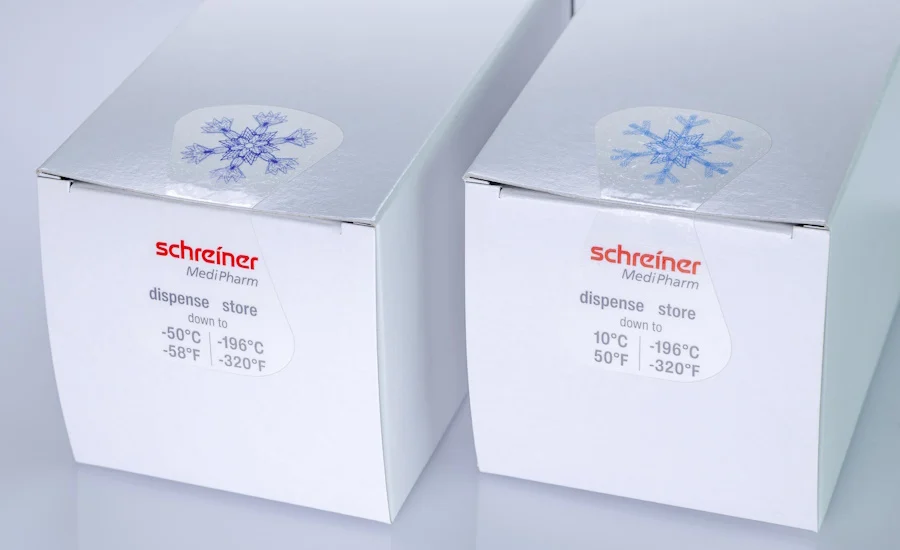
The technical sophistication of the new deep-freeze seal lies in its multi-layered security mechanism. Unlike standard labels, this transparent seal is designed to be "irreversible," meaning that once the packaging has been opened, the evidence of that opening cannot be hidden or repaired. This is achieved through a specialized multi-tear effect. When an unauthorized individual attempts to peel away the seal, the film itself is engineered to tear in a specific, predictable pattern due to integrated security cuts. Furthermore, the adhesive is so powerful that it creates a bond stronger than the internal structure of the cardboard packaging itself. Depending on the specific material of the folding box, the act of removing the seal will actually pull the fibers from the top layer of the cardboard. This dual-action failure—the tearing of the label and the destruction of the box surface—provides an immediate, high-visibility indicator that the product’s integrity has been breached.
To further bolster the security of the packaging, Schreiner MediPharm has integrated a sophisticated guilloche pattern into the seal. Guilloches are intricate, interlaced decorative patterns that are notoriously difficult to replicate using standard printing or scanning technology, making them a staple in the protection of banknotes and official documents. By including this feature, the manufacturer provides an additional layer of authentication that allows pharmacists and healthcare providers to verify the legitimacy of the product at a glance. Recognizing that different medications face different levels of risk, Schreiner MediPharm also offers the flexibility to add further security features. Depending on the specific threat scenario, the seals can be customized with overt features (visible to the naked eye), semi-covert features (requiring simple tools like a UV light), or covert features (requiring specialized laboratory equipment for verification).
Understanding that the manufacturing process is not a one-size-fits-all endeavor, the company has released the deep-freeze seal in two distinct variants to accommodate different production environments. The first version is optimized for dispensing at a relatively mild 10 °C (50 °F), which is suitable for standard cleanroom or controlled-temperature packaging lines. The second version is a high-performance variant designed for application at temperatures as low as -50 °C (-58 °F). This is a critical innovation for the industry, as it allows manufacturers to apply tamper-evident seals to products that are already in a frozen state, eliminating the need to briefly warm the medication—a process that could potentially degrade sensitive biological molecules. Both variants are fully compliant with the EU Falsified Medicines Directive and ISO 21976, providing pharmaceutical companies with a "plug-and-play" solution that meets global compliance standards while securing the supply chain from the point of manufacture to the point of care.
The rise of mRNA technology, which gained global prominence during the COVID-19 pandemic, has accelerated the demand for these types of specialized solutions. Because mRNA is inherently unstable, it must be encapsulated in lipid nanoparticles and kept in deep-freeze storage to prevent it from breaking down. Similarly, cell and gene therapies—which involve the modification of a patient’s own cells to fight diseases like cancer—often require cryogenic storage to maintain the viability of the living biological material. In these sectors, the packaging is not just a container; it is a vital component of the therapy’s efficacy. If a seal fails and a package is opened, the temperature fluctuation alone could render the treatment useless. By providing a seal that remains functional and tamper-evident at -196 °C, Schreiner MediPharm is essentially providing a "security blanket" for the most advanced medicines in the world.
Beyond the technical specifications of the product, Schreiner MediPharm emphasizes a consultative approach to security. The company does not simply sell labels; it partners with pharmaceutical manufacturers to analyze the entire process chain. This involves evaluating the specific materials used in the folding boxes, the environmental conditions of the packaging line, and the specific geographic risks of the distribution route. By tailoring each solution to the individual use case, Schreiner MediPharm ensures that the security measures are neither insufficient nor over-engineered, but rather perfectly aligned with the needs of the manufacturer and the safety of the patient.
The development of the deep-freeze seal is a testament to Schreiner MediPharm’s 75-year legacy of innovation. Based near Munich, Germany, the family-owned company has established itself as a global leader in the specialty labeling market. Their expertise spans a wide range of functional labels, including those with integrated NFC chips for digital tracking, labels with integrated needle protection for syringes, and complex multi-page labels for clinical trials. This deep well of experience allows them to tackle the most difficult challenges in the industry, such as the chemical and physical complexities of adhesives at cryogenic temperatures.
In the United States, Schreiner MediPharm maintains a significant presence through its business unit at Schreiner Group LP, located in Blauvelt, New York. This facility allows the company to serve the North American market with the same level of precision and technical support that has made its German headquarters famous. By maintaining manufacturing and consulting capabilities on both sides of the Atlantic, the company ensures that global pharmaceutical giants have consistent access to the highest standards of packaging security.
In conclusion, as the pharmaceutical industry pushes the boundaries of what is possible in medicine, the infrastructure supporting these innovations must keep pace. The introduction of the transparent deep-freeze seal by Schreiner MediPharm represents a significant milestone in cold chain logistics. By combining advanced adhesive chemistry with sophisticated mechanical security features and regulatory compliance, the company has created a solution that addresses the unique vulnerabilities of ultra-low temperature storage. In an era where the integrity of a single vial can mean the difference between a successful treatment and a medical failure, such advancements in tamper-evident technology are not merely optional upgrades—they are essential components of modern healthcare. Through its commitment to quality and its focus on the specialized needs of the biotech sector, Schreiner MediPharm continues to set the standard for safety and security in the global pharmaceutical supply chain.