
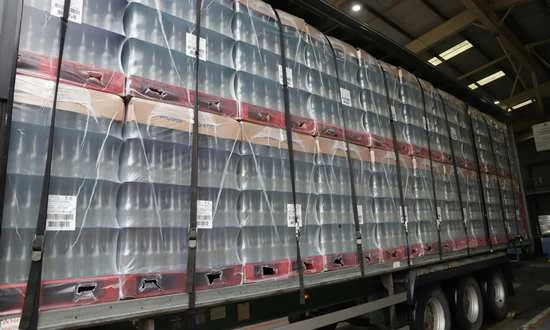
A significant industrial dispute is brewing at Encirc’s Elton, Cheshire facility, threatening the steady supply of glass packaging for some of the world’s most recognizable alcoholic beverage brands. The conflict centers on proposed redundancies that the manufacturing giant seeks to implement, a move strongly opposed by the Unite trade union. While Encirc, a critical player in the supply chain for giants like Jameson, Baileys, Budweiser, and Coors, insists that consumer stock levels will remain secure, Unite warns that planned strike action over the March and April period will inevitably lead to shortages of popular drinks on shelves across the UK.
Encirc specializes in the high-volume manufacturing and precise filling of glass bottles, serving a diverse clientele ranging from established spirits producers to major supermarket private-label wine operations. This pivotal role in packaging means any significant disruption at their facilities sends ripples throughout the beverage industry.
The crux of the current standoff is Encirc’s plan to reduce its workforce by 28 personnel at the Elton site. Unite argues that shedding this level of experienced staff—which includes vital maintenance crews and those directly involved in producing the raw glass containers and handling the filling lines—is not only unnecessary but actively dangerous. Union representatives contend that reducing headcount will inevitably place undue stress on remaining employees, dramatically increasing their operational burdens and fostering an environment ripe for safety lapses.
The union’s indignation is compounded by the financial context surrounding the company. Unite highlights that these proposed cuts are being enforced despite Encirc demonstrating robust profitability. This financial strength is underscored by the recent performance of its Spanish parent company, Vidrala, which reported stellar full-year results for 2025, boasting a net profit that soared past £192 million.
Sharon Graham, General Secretary of Unite, forcefully condemned the redundancy drive. "A profitable company such as Encirc should be investing in its hardworking staff, not making them redundant,” Graham stated, framing the proposed cuts as a failure of corporate responsibility rather than a necessary business adjustment. She implied that the surplus profits should be channeled back into securing employment rather than prioritizing shareholder returns through workforce reduction.
The impacted roles cover the entire production lifecycle at the site, from the initial formation of the glass containers to the intricate packaging processes in the filling halls. Workers fear that the loss of specialized knowledge, particularly in maintenance, could lead to equipment failures that further slow down production, regardless of the filling schedule.
In direct contrast to the union’s apocalyptic warnings regarding stock availability, Encirc has adopted a dismissive posture regarding the potential impact on the market. A company spokesperson issued a firm assurance: “There will certainly not be any bottle shortages. We will mitigate against any consequence this action will have, and do not anticipate any impact to our supply chain.”
The company expressed surprise that the situation escalated to the point of planned industrial action. Encirc pointed out that the restructuring process affecting its UK operations has been ongoing for nearly nine months and is now nearing its conclusion. Furthermore, the firm claims that the majority of staff reductions have already been absorbed, with most impacted employees opting for voluntary redundancy packages rather than facing compulsory redundancy notices. This suggests that the remaining 28 positions slated for cuts are the final, perhaps most resistant, elements of the restructuring effort.
Unite has scheduled a series of highly impactful strike dates: March 28th to 30th, followed by a longer stoppage from April 3rd to 7th. The union maintains that these actions, especially when involving staff critical to both glass production and filling operations, will severely constrict the flow of containers leaving the Elton site. Unite forecasts that the immediate and subsequent effects of these walkouts will translate directly into reduced availability of popular, fast-moving consumer goods—particularly bottled alcoholic beverages—in stores over the coming months.
Andrew Johnson, a Regional Officer for Unite, issued a final appeal to Encirc management, suggesting a window of opportunity remains to avert widespread disruption. “Encirc has still time to halt this disruptive strike action, but that relies on management coming back to negotiations with alternatives,” Johnson commented. This places the onus squarely on Encirc to table revised proposals that address the union’s concerns about job security and workload management, moving beyond the current, nearly complete restructuring plan.
The glass industry faces an exceptionally challenging operational landscape, a factor Encirc cited to justify its necessity for adaptation. The company detailed the severe external pressures influencing its strategic decisions. “In the UK we are up against some of the highest energy prices in the world,” the statement noted, highlighting the massive energy consumption inherent in glass manufacturing. This is compounded by a general downturn in consumer spending, described as a “cost-of-living crisis,” which has tempered demand for certain premium products.
Furthermore, Encirc pointed to new regulatory burdens as contributing factors to the need for operational streamlining. The introduction of the Extended Producer Responsibility (EPR) packaging tax, which places greater financial accountability on producers for the lifecycle management of their packaging, was described as being “detrimental to glass.” In the face of these intense economic and regulatory headwinds, Encirc maintains that its restructuring was not punitive but a survival imperative. “We had no choice but to change and adapt to these challenges,” the company concluded, framing the 28 redundancies as a measured response to external market forces rather than corporate avarice, despite the multi-million-pound profits reported by its parent entity.
The confrontation thus pits the imperatives of maintaining global supply chains and responding to high operational costs against the fundamental rights of workers in a profitable sector. As the strike dates approach, retailers and major beverage brands will be closely monitoring the situation, hoping that Encirc’s confidence in its mitigation strategy proves accurate, or that Unite and management can find a last-minute compromise to keep the glass flowing. Failure to resolve the dispute means that shelves dependent on the Elton facility could soon show noticeable gaps.