
MM Packaging has taken a definitive step toward a more sustainable and technologically advanced future by partnering with logistics specialist Farrall’s Group to overhaul its on-site transportation network. By deploying a state-of-the-art electric shunt truck and integrating cutting-edge automated loading systems, the company is not only slashing its carbon emissions but also drastically improving operational safety and efficiency at its manufacturing site. This strategic collaboration highlights a growing trend in the packaging industry: the move away from traditional, fossil-fuel-dependent logistics toward intelligent, green, and highly automated supply chain solutions.
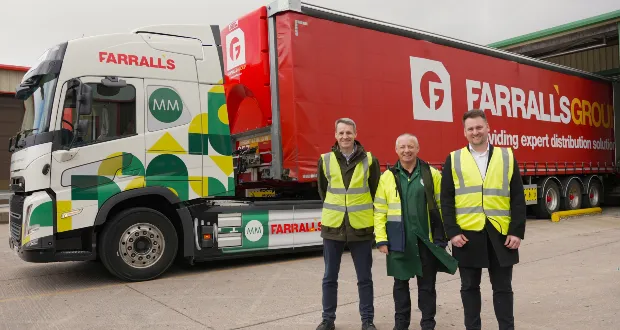
At the heart of this initiative is the deployment of a high-performance electric shunt vehicle, supplied by the Volvo truck dealership Thomas Hardie Commercials. Designed to navigate the critical 1,200-yard (0.4-mile) stretch between MM Packaging’s primary manufacturing facility and its dedicated warehouse, the truck serves as a localized, zero-emission workhorse. While the distance may be short, the frequency of trips makes it a significant contributor to the site’s carbon output, making the transition to electric power a high-impact environmental move.
The sustainability of the project is bolstered by the charging infrastructure installed at the Farrall’s Group facility. The electric vehicle, which features a robust 240kW powertrain, is powered entirely by solar energy harvested on-site. With a total solar capacity of 552kWh, Farrall’s Group has ensured that the "fuel" for this operation is as clean as the vehicle itself. This circular approach to energy management is a vital component of MM Packaging’s long-term strategy to reach its Scope 3 emissions targets, addressing the indirect emissions generated within its value chain.
Beyond electrification, the partnership has introduced a suite of automation technologies that transform the traditional loading and coupling processes. One of the most significant investments is the integration of the Jost KKS (Kupplungs-System) automated coupling system. Historically, coupling and uncoupling trailers have been labor-intensive, physically demanding, and potentially hazardous tasks for drivers. The Jost KKS system changes this paradigm by allowing the driver to control and monitor the entire coupling process remotely from the comfort and safety of the cab. By removing the need for the driver to exit the vehicle and manually operate heavy machinery, the system virtually eliminates the risk of human error and significantly lowers the chance of workplace injuries.
Further enhancing the speed and safety of the operation is the implementation of a Joloda Hydraroll loading system. This specialized equipment is designed to streamline the movement of goods between the manufacturing line and the transport fleet. By automating the loading and unloading of the trucks, the system dramatically reduces the requirement for manual labor, thereby creating a safer and more ergonomic working environment for site personnel. The impact on productivity has been immediate and impressive: trailers can now be fully emptied in just three minutes. With three trailers currently incorporated into the Joloda system, the logistical bottleneck that often plagues warehouse operations has been effectively cleared.
The operational workflow has also been re-engineered for safety. Every stage of the loading and unloading process now occurs at ground level, removing the need for personnel to work at heights or navigate precarious loading docks. This focus on ground-level efficiency, combined with the automated coupling and loading systems, represents a holistic approach to workplace safety that prioritizes the well-being of employees while simultaneously boosting throughput.
Julian Freeman, Managing Director of MM Packaging, emphasized that this project is a testament to the power of cross-industry collaboration. "This project has been a real collaborative effort with Farrall’s Group, who have used all their expertise and know-how," Freeman noted. "It underlines our commitment to the environment by further reducing our carbon footprint. It also demonstrates our ability to innovate through our investment to further automate the site." For MM Packaging, this is not just about adopting new technology; it is about embedding innovation into the very fabric of its logistics infrastructure to maintain competitiveness in an increasingly eco-conscious market.
Matthew Farrall, Group Managing Director of Farrall’s Group, echoed these sentiments, highlighting the shared vision that drove the project to fruition. "There has been a joint vision on improving carbon footprint and productivity," he stated. "This is a positive starting point for MM Packaging on their electric vehicle journey and a big step to meet their Scope 3 emissions targets. The investment in automation also helps create a safer working environment for MM Packaging."
The significance of this partnership extends beyond the immediate benefits of reduced emissions and faster loading times. It serves as a blueprint for other manufacturers who are looking to decarbonize their internal logistics. Many companies struggle with the "last mile" or, in this case, the "internal mile" of their supply chains, where short-distance heavy transport is often inefficient and reliant on aging, diesel-powered equipment. By proving that solar-powered electric shunting combined with advanced automation can yield both environmental and economic returns, MM Packaging and Farrall’s Group are setting a high bar for the rest of the packaging sector.
Furthermore, the integration of smart technology into the daily workflow provides a wealth of data that can be used for future optimization. The monitoring capabilities of the Jost KKS system and the efficiency metrics provided by the Joloda Hydraroll system allow management to track performance in real-time, identifying further opportunities for refinement. This data-driven approach is essential for scaling such projects in the future. As MM Packaging looks to expand its sustainability efforts across other sites, the lessons learned from this partnership will be invaluable.
In an industry where margins are tight and consumer demand for sustainable packaging is at an all-time high, the ability to demonstrate carbon reduction across the entire manufacturing and supply chain process is a major competitive advantage. The partnership between MM Packaging and Farrall’s Group is a clear indication that the future of logistics lies in the integration of green energy and smart automation. By eliminating manual tasks, reducing downtime, and utilizing renewable energy, these two companies have demonstrated that environmental responsibility and operational excellence are not mutually exclusive—rather, they are two sides of the same coin.
As the industry continues to face pressure to mitigate its environmental impact, projects like this offer a scalable solution. The investment in the Volvo electric shunt truck and the accompanying automated loading systems is a tangible, measurable step toward a net-zero future. It demonstrates that with the right partners and a willingness to embrace new technologies, companies can significantly reduce their Scope 3 emissions while simultaneously creating a safer, faster, and more efficient workplace for their employees. This initiative is more than just a logistical upgrade; it is a strategic investment in the future of sustainable manufacturing.