

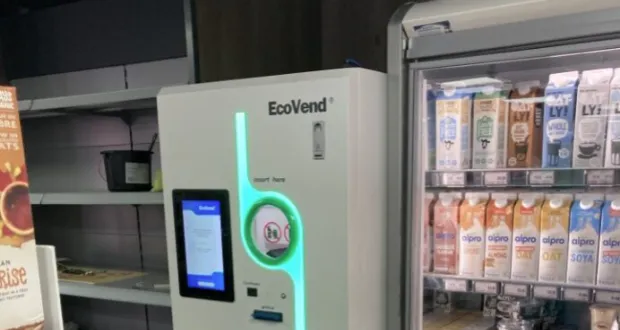
The regulatory landscape governing the placement of Reverse Vending Machines (RVMs) across the United Kingdom has undergone a significant and welcome transformation, designed to accelerate preparation for the mandated Deposit Return Scheme (DRS), scheduled for launch in October 2027. New provisions, specifically classified under the Class CA regulations, introduce a substantial liberalization of planning requirements, effectively granting many retailers the ability to install essential recycling infrastructure without navigating the often protracted process of securing full local authority planning permission. This pivotal policy shift recognizes the logistical hurdles inherent in deploying thousands of RVM units nationwide and aims to remove bureaucratic friction, thereby fostering greater operational readiness among businesses slated to host this crucial environmental technology.
The essence of the Class CA amendment centers on defining specific, permissible deployment zones for RVMs. Crucially, these machines can now be situated within the immediate curtilage of a retail establishment. This designation is broad, encompassing not only the interior sales floor or back-of-house areas but also extending to the immediate external perimeter of the shop. Furthermore, the regulations explicitly permit the inclusion of ancillary structures—such as canopies, enclosures, or protective housing—that are deemed necessary to ensure the functional operation and security of the RVM units themselves. This clarification eliminates previous ambiguities regarding whether external structures associated with the machine required separate planning consent, a common point of contention in preliminary rollout discussions.
While the overarching intent is to simplify the deployment process, the new framework is not entirely unrestricted. To maintain neighborhood amenity, control visual clutter, and ensure compliance with public safety standards, the relaxed planning rules are tethered to a set of stringent, non-negotiable physical specifications concerning the machines’ scale and positioning. These limitations are designed to strike a delicate balance: facilitating necessary infrastructure while preventing RVMs from unduly encroaching upon public thoroughfares or negatively impacting the aesthetic character of retail environments.
One of the most significant constraints imposed is the dimensional limitation on the machine’s physical footprint. Any standalone RVM installation, or cluster of machines operating as a single unit, is strictly capped at a maximum ground coverage area of 80 square meters. This substantial allowance suggests that even larger, high-capacity RVM hubs can be accommodated without triggering full planning scrutiny. Complementing this area restriction is a strict vertical limit; the maximum permissible height for any RVM structure, including any integrated housing or canopy, must not exceed four meters from ground level. This height restriction is critical, ensuring the infrastructure remains proportionate to typical retail building facades.
A specific clause addresses installations integrated directly into the existing structure of the retail building—a common solution for space-constrained urban outlets. For RVMs that are partially recessed into or affixed flush against the shop wall, the protrusion into the external environment is tightly controlled. The maximum allowable projection from the building face is set at two meters. This ensures that while the machine is accessible from the exterior, it does not unduly impede pedestrian flow or violate accessibility standards on adjacent pavements or plazas. Adherence to these precise physical parameters is the mechanism through which retailers achieve automatic planning dispensation under Class CA. Deviation, however minor, would necessitate a formal planning application.
Industry stakeholders have greeted these amendments with palpable enthusiasm. Travis Way, Managing Director of EcoVend, a prominent expert in RVM technology and deployment solutions, voiced strong approval for the regulatory update. "We wholeheartedly welcome the decision to empower retailers to deploy reverse vending machines without being subjected to the full rigors of the conventional planning permission process," Way stated. He characterized the move as a "positive and necessary stride forward," asserting that it substantially "eases the journey toward operational readiness for the UK’s Deposit Return Scheme."
Way further elaborated on the systemic benefits, particularly highlighting the impact on smaller retail operations. He noted that the reduction in administrative complexity associated with installation provides disproportionate support to smaller independent retailers. For these businesses, navigating the bureaucratic maze of local planning departments can often represent a significant, sometimes insurmountable, barrier to entry for complex new infrastructure projects. By streamlining this aspect, the government is effectively democratizing participation in the DRS, ensuring that smaller convenience stores and local shops are not disadvantaged compared to large national chains in terms of timely compliance.
Despite the celebratory tone regarding simplified installation, Way issued a measured caution, underscoring the ongoing need for clarity on other facets of DRS preparation. He emphasized that while the physical placement hurdle has been significantly lowered, retailers still require comprehensive, unambiguous guidance across the entire spectrum of DRS implementation. This broader guidance must cover aspects such as logistical handling of returned containers, financial reconciliation processes, data reporting requirements mandated by the scheme administrator, and technical integration with existing point-of-sale systems.
The imminent deadline of October 2027 serves as a constant reminder of the urgency. The phased rollout of RVM infrastructure across the UK is a massive undertaking, involving potentially tens of thousands of sites. Successful implementation hinges not just on the machines being physically present, but on their flawless integration into daily retail operations, ensuring consumers find the process of returning containers intuitive and convenient. The Class CA amendments tackle the where of the installation; the ongoing challenge for the industry and regulators now shifts to optimizing the how and what next.
This regulatory foresight demonstrates a pragmatic governmental approach to a complex national environmental initiative. Recognizing that infrastructure deployment is often the first and most visible bottleneck, the amendments proactively mitigate this risk. By establishing clear, measurable standards for RVM placement, the regulations provide certainty to machine suppliers, installers, and retailers alike. This certainty allows investment decisions to be made more swiftly, permits supply chains for specialized RVM hardware to be mobilized with greater confidence, and ultimately accelerates the physical footprint of the national recycling network. The success of the DRS is intrinsically linked to consumer convenience; ensuring RVMs are readily available, visibly situated, and easily accessible—as facilitated by these new rules—is paramount to achieving the high return rates necessary to meet the scheme’s ambitious circular economy targets. The removal of planning ambiguity is, therefore, not merely an administrative nicety, but a strategic enabler for national environmental policy execution.