

The Welsh Senedd has officially given its legislative backing to the framework establishing a comprehensive Deposit Return Scheme (DRS) for beverage containers, a significant stride towards bolstering Wales’ circular economy ambitions. This pivotal vote sets the stage for a system that mandates a refundable deposit on specified single-use drinks packaging, aimed at drastically improving collection rates and reducing packaging waste across the nation. The regulations, now cemented into law, delineate a clear operational timeline, signaling a new era for producers, retailers, and consumers alike.
The scope of the forthcoming scheme is extensive, encompassing closed single-use bottles and cans crafted from materials such as plastic, steel, glass, or aluminium. Crucially, these containers must hold between 150ml and 3 litres of liquid and be supplied for consumption within Wales. This detailed specification clarifies which products will fall under the deposit obligation, providing much-needed regulatory certainty to the beverage industry operating within the Welsh market.
The operational commencement date is firmly set for October 1, 2027. From this date forward, any entity supplying a drink in an in-scope container will be required to levy a mandatory, refundable deposit fee onto the purchaser. This financial incentive is designed to drive high return rates, as consumers will reclaim their deposit upon returning the empty packaging to an authorized ‘return point.’ The success of the scheme hinges on the robust establishment of these collection infrastructure points across Wales.
Industry reaction to the Senedd’s decisive action has been a mix of affirmation regarding the environmental goals and urgent pleas for pragmatic alignment with impending schemes in the rest of the United Kingdom. While the move is welcomed as a necessary step toward tackling persistent litter and maximizing material recovery, the divergence in material scope—particularly the inclusion of glass in Wales—presents complex logistical and economic challenges for businesses that operate nationally.
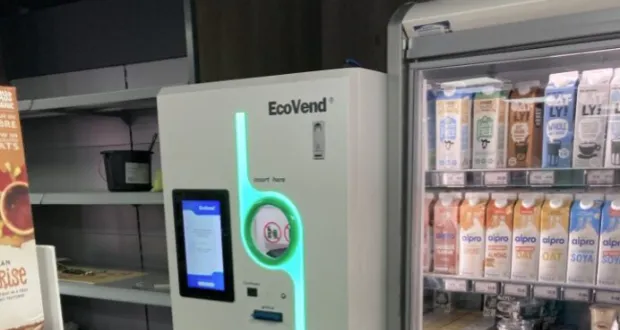
Travis Way, Managing Director at EcoVend, a key player in automated recycling technology through its RVM (Reverse Vending Machine) expertise under the international circular economy specialists Reconomy, articulated the industry’s immediate priorities. “The Senedd’s approval of these foundational regulations brings a vital measure of clarity, allowing the supply chain to begin serious preparatory planning for the Welsh Deposit Return Scheme,” Way stated.
However, he immediately highlighted the critical hurdle: interoperability. “As the sole nation within the UK to incorporate glass into its DRS mandate, ensuring seamless operational integration with the schemes planned for England, Scotland, and Northern Ireland becomes absolutely paramount,” Way emphasized. “Without robust cross-border harmonization on core elements such as labelling standards, reverse logistics pathways, and the fundamental system architecture, producers and retailers who serve the entire UK market face a significant, and potentially costly, fragmentation of their operations.”
Way stressed that consistency is the bedrock of efficiency. “Alignment on these technical specifications is not merely an administrative preference; it is the key to unlocking effective scheme functionality in practice,” he continued. “It directly translates to minimizing unnecessary financial burdens and operational friction for businesses, while simultaneously guaranteeing consumers a unified, straightforward experience regardless of where they purchase their beverages within the UK footprint. We are now keenly anticipating the formal appointment of the Deposit Management Organisation (DMO) by the Welsh Government. That appointment, followed by detailed guidance on how the Welsh system will interface with the broader UK framework, is essential to provide the certainty businesses require to finalize their capital investments and operational adjustments ahead of the 2027 launch.”
The beverage sector, represented by the British Soft Drinks Association (BSDA), also acknowledged the legislative milestone while amplifying concerns over divergence. Andy Bagnall, Director General of the BSDA, framed the regulation passage as a significant achievement for sustainable packaging management in Wales.
“The formal passage of the Welsh DRS regulations marks a pivotal moment for advancing the circular economy for beverage containers, specifically targeting high recovery rates for plastic bottles and metal cans,” Bagnall commented. He stressed the immediate administrative necessity: “With the legislative framework now in place, the path is cleared for the Welsh Government to expedite the appointment of the dedicated Deposit Return Scheme administrator for Wales. This swift action is crucial to ensure that the Welsh scheme can align its go-live date with the planned October 2027 launch across all four nations of the UK.”
Bagnall pivoted to the issue that causes the most significant industry unease: the inclusion of glass. Unlike the schemes proposed or established in the rest of the UK, the Welsh framework mandates the inclusion of single-use glass containers. This difference immediately complicates procurement, collection, processing, and reporting for companies that manage packaging across the whole of Great Britain.
“Looking ahead, particularly following the Senedd elections scheduled for May 2026, it is imperative that the Welsh Government enters into meaningful, practical engagement with industry stakeholders,” Bagnall urged. “The current decision to mandate the inclusion of single-use glass—an item explicitly excluded from the scope of the schemes elsewhere in the UK—requires a pragmatic reappraisal. Industry needs clarity on how this divergence will be managed operationally without imposing disproportionate burdens or creating a confusing patchwork of rules for businesses whose supply chains naturally cross the Welsh border.”
The differing material scope presents multifaceted issues beyond simple collection logistics. It affects the types of reverse vending machines required, the capacity and specialization needed at material recovery facilities (MRFs), and the marketability of the recovered glass cullet, which varies significantly based on purity and collection method. For producers, managing separate collection streams, distinct labelling requirements, and potentially different deposit values for glass in Wales versus England creates an administrative quagmire.
The next critical steps for the Welsh Government involve establishing the operational entity—the DMO—which will be responsible for managing the financial flows, setting the precise deposit level (which is yet to be finalized), overseeing the network of return points, and ensuring the entire system is robust, secure, and accessible to all citizens. The industry’s focus remains intently fixed on this appointment, as the DMO’s subsequent decisions on technology standards, logistics contracts, and detailed operational protocols will dictate the ease or difficulty of compliance for thousands of businesses.
In essence, the Senedd’s vote has moved the Welsh DRS from concept to concrete reality. The framework is set, the date is fixed, and the inclusion of glass is a defining characteristic. However, the subsequent success of this ambitious environmental policy will depend heavily on the Welsh Government’s ability to navigate the complexities of cross-border harmonization, ensuring that the pursuit of ambitious national targets does not inadvertently create undue barriers to trade and operational simplicity for the businesses that serve the Welsh public every day. The industry stands ready to invest and implement, provided the integration challenges posed by the material divergence can be effectively mitigated through collaborative planning in the coming years.