

Escalating geopolitical instability in the Middle East has cast a long, destabilizing shadow over the United Kingdom’s plastics industry, as the British Plastics Federation (BPF) issues a stark warning regarding the survival of domestic manufacturing. New data reveals that the conflict, specifically the heightened tensions involving Iran, is triggering a cascade of operational disruptions, unprecedented cost inflation, and severe supply chain fractures that threaten to destabilize a sector critical to the nation’s healthcare, energy, and consumer infrastructure.
The findings, synthesized from a rapid-response survey of 104 industry stakeholders conducted over a high-stakes three-day window, paint a grim picture of the current industrial landscape. An overwhelming 98% of respondents confirmed they are battling significant cost increases across both their core operational overheads and the procurement of essential raw materials. Perhaps more alarmingly, 58% of these firms characterized the impact on their daily operations as “severe or significant,” indicating that the disruption is no longer a localized issue but a systemic threat to business continuity.
The Anatomy of Supply Chain Paralysis
The crisis is characterized by a "triple threat" of rising logistics costs, energy volatility, and feedstock scarcity. The BPF survey highlights that 63% of participating firms have already been forced to grapple with the cancellation or postponement of orders—a metric that serves as a leading indicator of the broader economic contraction expected in the coming months.
The vulnerability of the UK market is underscored by a heavy reliance on international trade corridors. With the UK importing more than 50% of its plastic raw materials, the country is disproportionately exposed to volatility in the Middle East. Philip Law, Director General of the BPF, emphasized that the nation’s growing dependence on this region for feedstock and polymers has turned a foreign conflict into a domestic industrial emergency.
"For many companies, the threat posed by the current conflict is existential," Law remarked. "We are witnessing an exaggerated impact because our supply chains are deeply integrated with Middle Eastern producers. When these routes are compromised, the ripple effect reaches every corner of the UK economy, from medical equipment manufacturing to energy infrastructure."
Beyond Polymers: A Broad Industrial Contagion
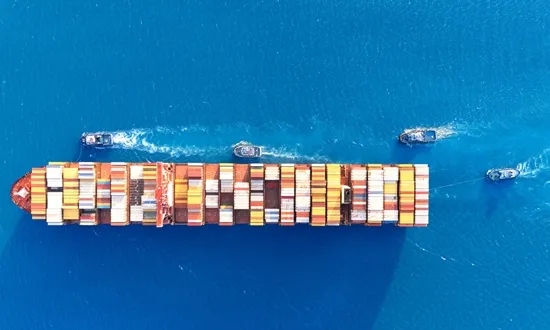
The disruption extends far beyond the availability of virgin polymers. The survey reveals that the scarcity of vital components and resources—many of which are sourced from the Far East—has reached a critical threshold. As shipping lanes become contested and freight charges surge, the cost of moving goods globally has become prohibitive for many small-to-medium enterprises.
The crisis is also drawing concern from the wider waste and recycling sectors. Paul Sanderson, the outgoing Chief Executive of the Recycling Association, noted that the conflict is injecting a "great deal of uncertainty" into an industry that has already endured years of volatility.
"It isn’t just about the raw material cost," Sanderson explained. "We are seeing a convergence of factors. Energy costs for reprocessors are climbing, and the direct link between oil prices and the cost of haulage and shipping is creating a perfect storm. If this war suppresses global economic activity, we are looking at a dual-threat of reduced demand and strangled supply chains. It is a compounding crisis that could set back the UK’s recycling progress significantly."
The Call for Government Intervention
Facing what the BPF describes as an "existential" threat, the federation is calling for an urgent, proactive response from the UK government. The BPF argues that the plastics industry is too central to national security—particularly in its support of healthcare and energy sectors—to be left to navigate these global headwinds without targeted policy support.
The BPF’s proposed roadmap for government intervention includes three primary pillars:
- Energy Price Mitigation: Implementing support mechanisms for plastic producers who are currently facing unsustainable surges in energy costs that threaten to halt production lines.
- Regulatory Review: A comprehensive review of the cumulative impact of incoming environmental and packaging regulations, which, while well-intentioned, may be adding excessive administrative and financial burdens during a period of extreme economic fragility.
- Strategic Reinvestment: A formal request to ring-fence the revenue generated from the UK’s Plastics Packaging Tax. The BPF suggests that this capital should be directly reinvested into domestic recycling infrastructure, thereby reducing the UK’s long-term dependence on imported polymers and foreign supply chains.
The Dilemma of Cost Pass-Through
As the industry stares down these rising costs, the inevitable outcome is a price hike for downstream consumers. Industry leaders are caught in a difficult balancing act: absorb the costs and risk insolvency, or pass them on to manufacturers and consumers, potentially fueling further inflation.
"To help ensure the survival of our industry and to protect jobs, costs will have to be passed down the supply chain," Law admitted. "We look to all companies to act responsibly, but the reality is that the margin for error has vanished. The Government should be acutely aware of this vulnerability in the UK’s security and act to protect an industry so central to our national interests."
A Macroeconomic Outlook
The outlook for the next quarter remains bleak, with 68% of survey respondents anticipating that the supply situation will deteriorate further before any stabilization occurs. As the US and other global powers weigh the implementation of blockades and sanctions, the risk to the "just-in-time" delivery models that underpin modern British industry grows.
The crisis serves as a sobering reminder of the UK’s industrial fragility in an interconnected, yet increasingly volatile, global market. By relying heavily on imported feedstock from regions prone to geopolitical upheaval, the UK plastics sector has inadvertently tied its fate to the stability of the Middle East.
As the BPF continues to lobby for state support, the message from the factory floor is clear: without intervention, the combination of rising logistics costs, energy inflation, and supply chain bottlenecks will lead to a permanent thinning of the UK’s industrial base. Whether through strategic stockpiling, localizing supply chains, or providing targeted financial relief, the government now faces a decisive moment to protect a sector that effectively holds the building blocks of the British economy together.
For now, firms are bracing for a prolonged period of disruption, with many forced to prioritize survival over growth. The coming months will test the resilience of the UK’s manufacturing sector, as it navigates the treacherous intersection of war-driven supply chain failure and the ongoing, complex transition toward a more sustainable and circular domestic economy.