
The global meat and sausage industry stands at a critical crossroads where the imperative for food safety and shelf-life extension must now harmonize with aggressive environmental mandates. For decades, the primary objective of protein packaging was functional: preventing spoilage, maintaining the organoleptic properties of the product, and ensuring the highest levels of hygiene from the processing plant to the consumer’s table. However, the introduction of the European Union’s Packaging and Packaging Waste Regulation (PPWR) has fundamentally altered the landscape, turning sustainability from a corporate social responsibility initiative into a mandatory operational requirement. As the industry pivots toward a circular economy, SÜDPACK, a leading family-owned film manufacturer based in Ochsenhausen, Germany, is spearheading a technological revolution that proves high-performance protection and environmental stewardship are not mutually exclusive.
The PPWR represents one of the most significant shifts in legislative history for the packaging sector. By 2030, the regulation dictates that all packaging placed on the EU market must be recyclable in an economically viable manner. Furthermore, it sets ambitious targets for the integration of recycled content in plastic packaging and mandates a reduction in overall packaging waste. For meat processors, this creates a complex challenge: meat is a highly perishable commodity with a significant environmental footprint. The carbon cost of producing one kilogram of beef or pork is substantially higher than the carbon cost of the plastic used to protect it. Therefore, any move toward "greener" packaging that results in increased food waste would be an environmental and economic net negative. SÜDPACK’s strategy addresses this paradox by focusing on two primary pillars: the radical reduction of resource consumption through material efficiency and the transition to mono-material structures that fit seamlessly into existing recycling streams.
To understand the necessity of these innovations, one must look at the scale of the food waste problem. According to the Food and Agriculture Organization of the United Nations (FAO), approximately one-third of all food produced for human consumption is lost or wasted globally. In the meat sector, this waste is particularly costly due to the intensive resources required for animal husbandry, processing, and cold-chain logistics. High-quality plastic packaging, whether utilizing traditional laminate structures or modern recyclable mono-materials, acts as a critical barrier against oxygen, moisture, and microbial contamination. By extending the shelf life of ground meat, steaks, sausages, and deli cuts, advanced film technology directly reduces the volume of meat that ends up in landfills. SÜDPACK’s approach emphasizes that the most sustainable package is the one that successfully delivers the product to the consumer in peak condition, thereby preserving the "embedded" carbon of the meat itself.
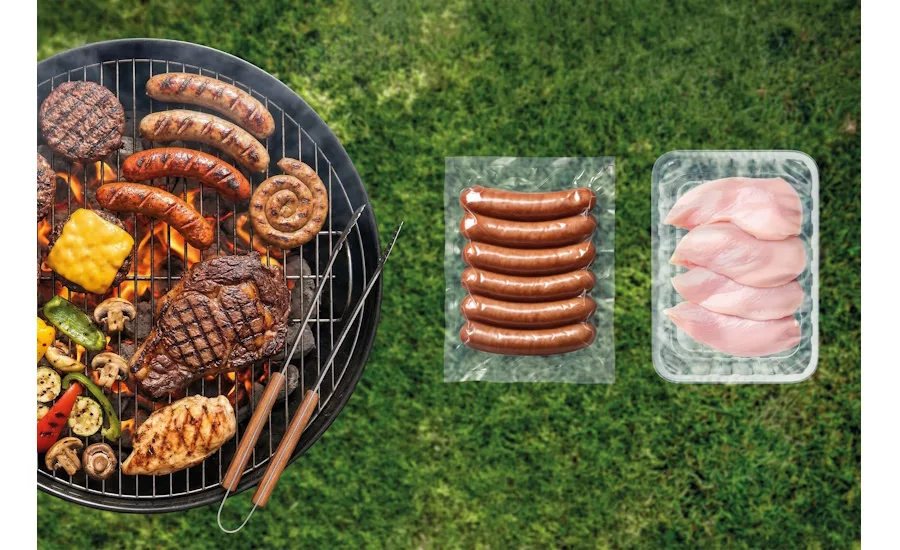
At the heart of SÜDPACK’s success is its role as a "one-stop shop" for holistic film concepts. The company’s expertise in extrusion technology allows it to engineer films that are thinner than ever before without sacrificing the mechanical strength or barrier properties required for high-speed industrial packaging lines. This is particularly evident in their development of Modified Atmosphere Packaging (MAP) and vacuum solutions. These systems are designed to replace the ambient air inside a package with a gas mixture (typically carbon dioxide and nitrogen) that inhibits the growth of aerobic bacteria and slows down the oxidation process. The result is a product that retains its natural color and freshness for days or even weeks longer than traditional wrapping methods.
One of the standout innovations in SÜDPACK’s portfolio is the Pure-Line product family. Specifically designed for cold cuts and deli products, Pure-Line utilizes a polypropylene (PP)-based structure for both the top and bottom webs. Traditionally, high-barrier films required the lamination of different plastic types—such as PE, PA, and PET—to achieve the necessary protection. While effective at preserving food, these multi-material laminates are notoriously difficult to recycle because the different polymers cannot be easily separated. The Pure-Line series solves this by using mono-material PP that maintains excellent thermoformability and stability. The bottom web provides a rigid or semi-rigid structure that protects the product during transport, while the peelable high-barrier top web ensures a clean, consumer-friendly opening experience. Because the entire package is PP-based, it can be processed by standard recycling facilities, supporting the transition to a closed-loop system.
Furthermore, SÜDPACK has addressed the needs of heavy-duty applications with its Multifol® line. Ground meat, frankfurters, and bone-in chops present unique challenges; they require packaging with high puncture resistance to prevent "leakers" that lead to spoilage. The Multifol® series offers both conventional and recyclable laminate structures that are among the company’s top-selling products. These films are engineered for maximum transparency, which is a vital factor at the Point of Sale (POS). Consumers increasingly demand to see the quality, color, and texture of the meat they are purchasing. High-clarity films like those in the Multifol® range cater to this psychological need while providing the sealing integrity necessary to withstand the rigors of the supply chain.
In the realm of lidding films, SÜDPACK’s SafePeel Clear NT represents a significant leap forward in material efficiency. In an industry where "thinner is better" for the environment, SafePeel Clear NT measures just 37 µm in thickness—a reduction of more than 25% compared to its predecessor. Despite this ultra-thin profile, the film offers exceptional sealing performance even when the sealing seams are contaminated with fat or protein juices—a common occurrence in meat packing. This reliability is crucial for products like poultry and steaks, where a single compromised seal can lead to entire batches being discarded. By sealing effectively to mono-PP trays, SafePeel Clear NT enables the creation of a fully recyclable tray-lidding solution that satisfies both the consumer’s desire for convenience and the regulator’s demand for circularity.
Sustainability also extends to the "on-the-go" and snack markets, where the CarbonLite® series is making a substantial impact. This line includes lightweight PP flow packs for ground meat and stable, self-standing PE doypacks for products like salami sticks or jerky. The CarbonLite® philosophy is centered on "low input, high output"—using the minimum amount of plastic necessary to achieve the maximum possible barrier protection. These mono-materials are optimized for high-cycle rates on packaging machines, ensuring that manufacturers do not have to sacrifice throughput or operational efficiency to meet their green goals.
The economic dimension of this shift cannot be overstated. SÜDPACK views the transition to sustainable packaging not merely as a compliance exercise, but as a strategic economic opportunity. By utilizing thinner, more efficient films, manufacturers can reduce their overall material costs and lower their "plastic tax" liabilities in jurisdictions that penalize non-recyclable or virgin-plastic usage. Moreover, the process reliability of SÜDPACK’s films—which are designed to run smoothly on standard packaging machinery—minimizes downtime and scrap rates. In a high-volume, low-margin industry like meat processing, these incremental gains in efficiency can significantly bolster the bottom line.
Looking toward the future, the role of bio-based alternatives and chemically recycled plastics will become increasingly prominent. SÜDPACK is already positioning itself as a driver of these technologies, exploring how renewable resources can be integrated into the film-making process. The ultimate goal is a decoupling of plastic production from fossil fuels, creating a truly sustainable lifecycle for food packaging. As the industry moves closer to the 2030 deadlines set by the PPWR, the collaboration between film manufacturers, meat processors, and retailers will be the defining factor in the success of the circular economy.
In conclusion, the evolution of meat and sausage packaging is a testament to the power of polymer engineering. Through brands like Pure-Line, Multifol®, and CarbonLite®, SÜDPACK is demonstrating that the future of food packaging lies in sophisticated simplicity. By moving toward mono-materials, reducing thickness, and enhancing recyclability, the industry can protect the world’s protein supply while simultaneously protecting the planet. The shift toward sustainable concepts is no longer a distant vision; it is a current reality that offers a clear path toward food safety, economic profitability, and environmental responsibility.